
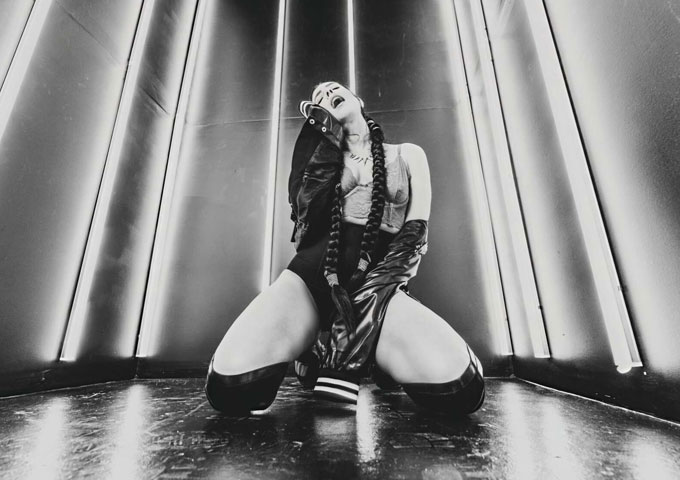
The She-Wolf Rises: Britny Lobas Delivers Raw Truth and Unbridled Power in “You Can Have It”
In a musical landscape often sanitized by over-production and hollow sentiment, Britny Lobas emerges as a force of nature—a pop-rock phenomenon who refuses to play by anyone else’s rules. Her latest single, “You Can Have It”, released May 16, 2025, stands as a testament to the transformative power of artistic authenticity, serving up a sonic middle finger to those who dare underestimate the depth of human resilience.
The Austin-based powerhouse, originally from Cleveland’s gritty musical breeding grounds, has crafted something extraordinary with this release—a track that doesn’t just play; it confronts, challenges, and ultimately liberates. “You Can Have It” is the sound of someone who has walked through fire and emerged not just unscathed, but blazing with newfound purpose.
What makes “You Can Have It” so devastatingly effective is its refusal to sugarcoat the brutal mathematics of human relationships. This isn’t another saccharine breakup ballad or a passive-aggressive lament wrapped in major chords. Instead, Lobas has delivered something far more dangerous: a declaration of independence that burns with the intensity of someone who has finally stopped apologizing for taking up space.
The track opens with a vulnerability that feels almost conversational, drawing listeners into what feels like an intimate confession. But don’t mistake this intimacy for weakness—Lobas‘ voice carries the weight of someone who has stared down their demons and decided to dance with them instead. Her vocal delivery channels the sultry darkness of Amy Winehouse while maintaining the razor-sharp edge that made Paramore untouchable, all wrapped in the powerhouse delivery that recalls Christina Aguilera‘s most commanding moments.
The production on “You Can Have It” reflects Lobas‘ keen understanding of dynamic storytelling. The arrangement breathes with the confidence of an artist who knows exactly when to pull back and when to unleash hell. Each element serves the song’s central thesis: that walking away isn’t defeat—it’s strategy.
The instrumentation creates a cinematic landscape that supports rather than overshadows Lobas‘ commanding presence. There’s a gritty sophistication to the sound design that speaks to her musical maturity—this isn’t the work of someone throwing everything at the wall to see what sticks. Instead, it’s the calculated precision of an artist who has learned to weaponize restraint.
Lobas‘ journey from Corbella member to solo artist represents more than a simple career pivot—it’s a complete artistic metamorphosis. Her approach to releasing music reflects a strategic intelligence that sets her apart from her contemporaries. Like a master chess player, she preserves her “song coins” with the patience of the Four of Pentacles, understanding that anticipation is its own form of artistry.
This methodical approach has created a unique dynamic with her fanbase, who exist in what can only be described as “regular stasis of anticipation.” It’s a brilliant psychological maneuver—by controlling the flow of her releases, Lobas has transformed each new track into an event rather than mere content.
The music industry’s tastemakers have taken notice. EarMilk, KUTX, Clout, and Illustrate Magazine have all recognized what discerning listeners are discovering: Britny Lobas represents something genuine in an often artificial landscape. Her live performances, described as “electrifying” and “impossible to forget,” have earned her opening slots alongside industry heavyweights Big Boi, LP, and Maggie Rose.
These aren’t token appearances—they’re strategic alignments with artists who understand the value of authentic showmanship. Lobas‘ live presence reportedly combines “raw honesty with unapologetic passion,” creating experiences that transcend typical concert dynamics.
“You Can Have It” succeeds because it understands that the most powerful songs aren’t always the loudest ones. Lobas has crafted a track that operates on multiple emotional frequencies simultaneously—it’s vulnerable yet fierce, introspective yet confrontational, deeply personal yet universally relatable.
The song’s central message—that self-worth isn’t negotiable—resonates with particular force in our current cultural moment. In an era where boundaries are often treated as suggestions and self-advocacy is misconstrued as selfishness, Lobas offers a masterclass in dignified defiance.
Lobas‘ vocal performance on “You Can Have It” demonstrates her technical prowess while serving the song’s emotional core. Her voice “soars and growls” with equal conviction, navigating the track’s dynamic shifts with the confidence of someone who has complete command of their instrument.
The vocal arrangement showcases her range without descending into showboating—every run, every growl, every whispered confession serves the story. It’s the difference between vocal gymnastics and vocal storytelling, and Lobas clearly understands the distinction.
What sets “You Can Have It” apart from similar themed releases is its refusal to seek permission or forgiveness. This isn’t a song asking for understanding—it’s a statement delivered with the finality of a door closing. The track’s confrontational energy stems not from anger, but from clarity—the kind of clarity that only comes from finally understanding your own worth.
The production choices support this narrative stance. Rather than building to explosive choruses that might undermine the song’s controlled power, the arrangement maintains a steady burn that feels more like a slow-motion explosion than a traditional pop-rock crescendo.
The Austin music scene has always been a crucible for authentic artistry, and Britny Lobas represents the city’s continued evolution as a breeding ground for uncompromising talent. Her transition from Cleveland’s working-class musical traditions to Austin’s eclectic creative community has clearly influenced her artistic development, creating a sound that feels both rooted and revolutionary.
“You Can Have It” positions Britny Lobas as an artist unafraid to excavate the uncomfortable truths that many prefer to leave buried. In an industry often criticized for its reluctance to address real emotional complexity, Lobas offers something increasingly rare: music that doesn’t just soundtrack life’s moments but actively participates in them.
As she continues building momentum across the country’s stages, Lobas represents a return to the kind of artist-audience relationship that feels increasingly precious—one built on trust, authenticity, and the shared understanding that great music should challenge as much as it comforts.
“You Can Have It” isn’t just a single—it’s a statement of artistic intent from an artist who clearly understands that the most powerful music emerges from the willingness to be completely, unapologetically human. In a world that often asks us to diminish ourselves for the comfort of others, Britny Lobas offers a different path: stand tall, speak truth, and let them have whatever they think they need. You’ll keep what actually matters. The she-wolf has found her voice, and she’s not backing down.
OFFICIAL LINKS: FACEBOOK – SPOTIFY – INSTAGRAM – YOUTUBE – TIKTOK