Soul de Vienne and “That Was Insane”: When Impulse Turns Into Intimacy
Some songs feel like polished statements. Others feel like secrets you were never meant to hear. Soul de Vienne’s single “That Was Insane” belongs firmly in the latter category, unfolding not as a grand romantic gesture but as a quietly electrifying confession. It captures that disarming instant when routine fractures, curiosity takes the wheel, and human closeness arrives without permission.
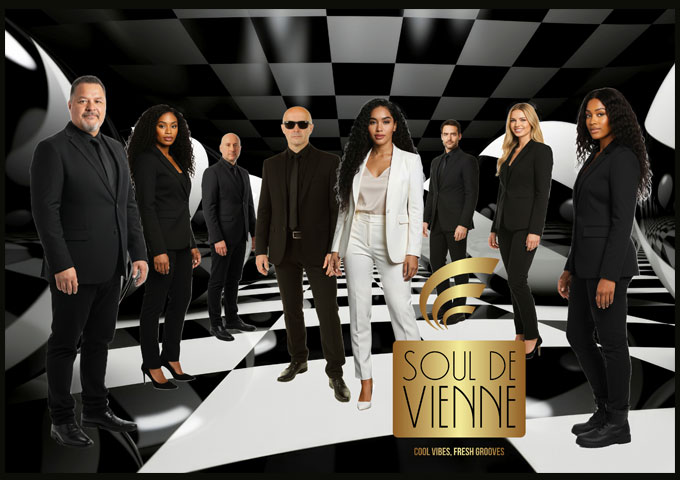
Led by Austrian composer and producer Roman Schleischitz, Soul de Vienne has built a reputation for music that values emotional truth over spectacle. With “That Was Insane”, the collective distills that philosophy into a narrative that is almost cinematic in its restraint. The song does not shout its intentions. It leans in, lowers its voice, and trusts the listener to follow.
The story begins in the mundane. An ordinary workday. Noise outside the window. Concentration dissolving under the mechanical insistence of roadworks. This opening matters, because it establishes a crucial emotional baseline. The protagonist is not searching for adventure. She is seeking relief. What follows feels less like a decision and more like a slip in gravity, a moment where the expected path simply gives way.
When the unexpected encounter arrives, it is rendered with wit and acute observational detail. The stranger is not idealized. He is sweaty, blunt around the edges, unmistakably real. That realism is essential to the song’s emotional credibility. “That Was Insane” is not about fantasy fulfillment. It is about attraction that surprises even the person experiencing it. The recurring phrase at the heart of the song functions as both judgment and surrender. Calling the moment insane is an attempt to rationalize something that resists logic.
Vocally, Gwen delivers one of the most compelling performances in Soul de Vienne’s catalog. Her voice carries irony and vulnerability in equal measure, never tipping too far into either. She sounds amused by herself, slightly incredulous, yet undeniably present. There is no melodrama here, no theatrical swell designed to instruct the listener how to feel. Instead, her phrasing suggests someone thinking out loud, replaying events in real time, still unsure whether to laugh, blush, or lean back in.
Musically, the arrangement mirrors this emotional ambiguity with remarkable finesse. The groove settles into a relaxed, breathing rhythm that feels lived-in rather than imposed. Jazz-inflected harmonies drift through the track without demanding attention, while modern soul textures keep the song grounded in the present. An expressively restrained trumpet weaves through the arrangement like an inner monologue, commenting without interrupting. It is sensual music, but not overtly seductive. Confidence replaces urgency, and space becomes as important as sound.
Lyrically, “That Was Insane” excels in how it frames desire as something awkward, impulsive, and deeply human. The protagonist’s internal negotiations are laid bare. She questions the stranger’s audacity even as she is drawn to it. She recognizes the social scripts she is supposed to follow, then quietly steps outside them. The song never frames this as rebellion. It feels more like recognition. A moment where two people see each other without pretense, and that recognition dissolves distance faster than caution can intervene.
As the narrative progresses, the tone subtly shifts. What begins as a daring exchange evolves into something gentler. The lyrics reveal kindness where the protagonist expected only bravado. Attention replaces assumption. By the time the night unfolds, the song has transformed from a tale of impulse into one of care. This evolution is crucial. “That Was Insane” is not interested in shock value. Its emotional core lies in how quickly intimacy can grow when curiosity is met with respect.
The closing moments of the song are particularly telling. Rather than offering a definitive resolution, the narrative lingers in uncertainty. A phone in hand. A heartbeat quickening. A number written in lipstick, equal parts playful and sincere. The question is not whether the encounter mattered, but what to do with its aftermath. That unresolved tension is where the song truly resonates. Real connection rarely arrives with clean conclusions, and Soul de Vienne understands the power of leaving the door slightly ajar.
Schleischitz’s compositional background, shaped by classical training and jazz studies at the Vienna Conservatory, is evident throughout the track. There is structure here, but it never feels rigid. The song breathes. It listens as much as it speaks. That balance between precision and spontaneity defines the broader identity of Soul de Vienne, a project that thrives on collaboration across borders and disciplines. Each musician contributes not to dominate, but to serve the emotional arc of the piece.
More than a standalone single, “That Was Insane” functions as a manifesto of sorts. It affirms that sophistication does not require detachment, and that elegance can coexist with raw honesty. In a musical landscape often obsessed with extremes, this track finds its power in nuance. It celebrates the fleeting moments that change us not because they were planned, but precisely because they were not.
Ultimately, Soul de Vienne offers a reminder that some of the most meaningful experiences slip in through the side door of our lives. They arrive disguised as coincidence, leave behind a trace of warmth, and challenge us to decide whether to follow up or let the memory glow quietly on its own. “That Was Insane” does not answer that question for us. It simply captures the moment where everything was possible, and that, in itself, is more than enough. “That Was Insane” by Soul de Vienne is available on all major streaming platforms.
OFFICIAL LINKS: SPOTIFY