Madame Z – “Black Sheep”: A Cinematic Rock Testament to Survival, Self-Worth, and the Power of Being Different
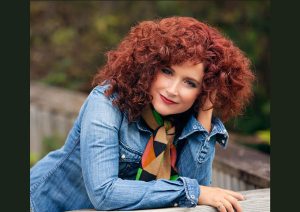
There is a certain gravity to Madame Z that cannot be manufactured. It comes from lived experience, from cycles of disappearance and return, from choosing creation even when silence might feel safer. With her single “Black Sheep”, Z delivers one of the most resonant statements of her career, a song that feels less like a release and more like a reckoning. This is not rebellion for effect. It is truth articulated through melody, scars transmuted into sound.
Based in Sacramento, California, Madame Z stands at a rare intersection of maturity and momentum. After raising three children, earning a master’s degree, and stepping confidently into professional stability, she has entered what she calls her third rebirth. It is a resurrection fueled by clarity rather than chaos. She writes constantly, notebooks always within reach, as if the music might slip away if she pauses too long. That urgency is audible throughout “Black Sheep”, a track shaped by memory but aimed toward the future.
Z’s artistic identity has always been fluid, sensually dark, emotionally intelligent, and unafraid of contradiction. She is a writer, lyricist, singer, and producer who favors the electric guitar as both weapon and companion. It gives her music a rock backbone while allowing her vocals to explore vulnerability without fragility. Since 2019, she has released over 50 songs, including a full studio album, a collection of reimagined covers, and a steady stream of singles and collaborations. Prolific, yes, but never careless. Each song feels considered, lived in, earned.
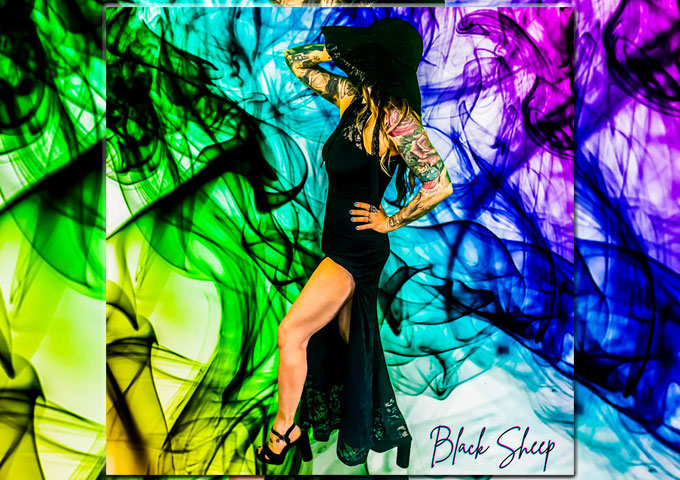
“Black Sheep” is a cinematic rock ballad that unfolds patiently, built on melancholic guitar motifs that evoke isolation and introspection. As the song progresses, majestic power chords rise like emotional architecture, supporting a vocal performance that is restrained yet devastating. Featuring musicians Turbomaus and Mauro Scarsellone, the production balances intimacy with scale, mirroring the inner life of someone who has always felt too much in a world that prefers conformity.
Lyrically, the song is rooted in Z’s upbringing within a conservative evangelical household, where curiosity was discouraged and questions came with consequences. Her father’s past as a hippie musician, complete with hidden Led Zeppelin records, offered a glimpse of another world, one that felt forbidden yet magnetic. Feeling like an outcast at home and geographically isolated, Z turned inward, reading obsessively and writing as an act of quiet defiance. That sense of being misaligned with one’s surroundings is the emotional engine of “Black Sheep.”
Rather than framing difference as a burden to overcome, Z reframes it as an identity to be honored. The song explores the cost of shame that is freely offered by society, the exhaustion of being perpetually misunderstood, and the quiet resilience required to survive that pressure. The recurring question of why she feels so different is not posed as self-pity, but as an existential inquiry that eventually leads to self-recognition. What once felt like a test becomes proof of endurance.
One of the song’s most powerful lyrical achievements is its refusal to romanticize alienation. Z acknowledges the pain of being chosen last, of being labeled misshapen, of never fitting inside the prescribed box. Yet she resists the temptation to paint herself as a martyr. Instead, she arrives at a hard-won realization: there is something inside her that external forces cannot destroy, no matter how persistent the attempts. The repetition toward the outro functions like a mantra, a declaration of survival that gains strength through insistence rather than volume.
Vocally, Z delivers the song with a controlled intensity that speaks to years of stylistic range. Her background includes musical theater, metal bands, jazz ensembles, and performances in Nashville, Tennessee. All of that experience converges here, not in showmanship, but in emotional precision. She knows exactly when to hold back and when to let the voice fracture just enough to let the listener in.
Thematically, “Black Sheep” aligns with Z’s current sense of purpose as an artist. After a period of solitude away from music, her return via BandLab opened the door to global collaboration and creative renewal. Today, she makes music not for validation, but because she needs to. It is therapeutic, yes, but also outward-facing. Z believes artists have a responsibility to hold a candle in dark times, to offer light without pretending the darkness is not real.
What makes “Black Sheep” especially compelling is its generational reach. Z is no longer writing solely for herself, but for her children and their children, for anyone who has ever felt peripheral or miscast. The song does not demand that listeners change who they are. It simply asks them to recognize their worth without seeking permission from the mainstream.
As Madame Z prepares a new series of singles, explores another of her distinctive cover projects, and plans live performances across varied musical settings, “Black Sheep” stands as a defining moment. It is both a personal exorcism and a communal anthem, a reminder that survival itself can be an act of rebellion. In embracing the identity she was once shamed for, Madame Z has created a song that does more than resonate. It reassures. It stands tall for those still learning to do the same.
OFFICIAL LINKS: FACEBOOK – BANDCAMP – SPOTIFY – INSTAGRAM – YOUTUBE