
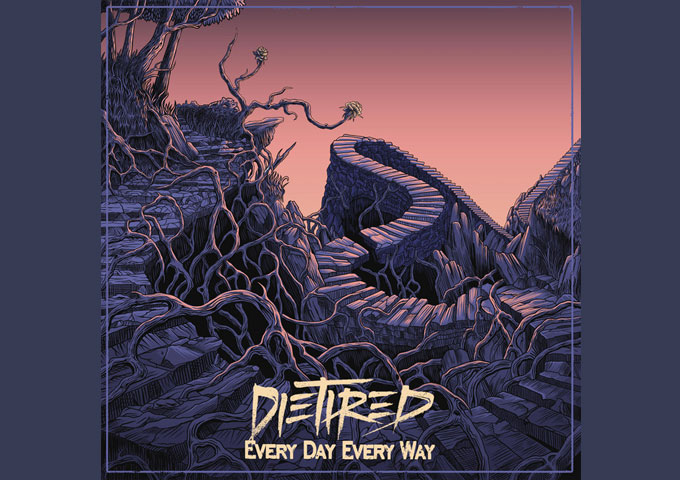
Die Tired Confronts Loss and Finds Strength in the Relentless Drive of “Every Day Every Way”
A powerful alternative-rock release that examines the painful distance between holding onto yesterday and accepting tomorrow. Die Tired transform the emotional weight of absence into a compelling anthem of perseverance. Driven by heavy guitars, brooding atmospherics, and an impassioned vocal performance, the track gives grief a muscular musical presence. Its lyrics confront the uncomfortable reality that time cannot be stopped, no matter how desperately we resist change. Released through Better Off Alive Records, “Every Day Every Way” ultimately celebrates the quiet determination required to keep moving forward.
Pennsylvania-based alternative-rock outfit Die Tired bring an emotionally charged perspective to the complicated relationship between loss, memory, and personal resilience on their October 30, 2026 single, “Every Day Every Way,” released through Better Off Alive Records. Built around muscular guitar work, an insistent rhythmic foundation, and vocals that balance vulnerability with outright defiance, the track explores what happens when life moves forward while part of us remains emotionally anchored to something we cannot recover. Rather than offering an easy resolution, Die Tired acknowledge the resistance, frustration, and uncertainty that accompany profound change, finding their strongest statement in the decision to keep trying regardless of how difficult the journey becomes.
The song immediately establishes its emotional landscape through a sequence of cold-weather images and recollections. Its opening references to a November night and a December drive create a sense of seasonal transition, but the underlying significance is far more personal than the changing calendar. These are memories attached to a departure, moments that have acquired lasting emotional significance because of what happened afterward. The image of someone leaving while the keys remain on the floor is particularly evocative. It suggests a departure that carries unanswered questions, unresolved feelings, and perhaps the painful awareness that something familiar has become irretrievably different. The everyday objects and specific details make the experience feel tangible, allowing listeners to recognize the personal significance of seemingly ordinary moments.
The recurring insistence that yesterday has disappeared while tomorrow never quite arrives introduces the song’s central psychological conflict. For someone struggling with loss, the present can become an uncomfortable space between two opposing realities. The past remains vivid because it contains everything that feels meaningful, while the future appears distant, uncertain, or even impossible to imagine. Die Tired capture this emotional paralysis through repetition, emphasizing how grief can trap the mind in an endless cycle of recollection and resistance. The declaration of refusing change is especially revealing. It is not necessarily an expression of stubbornness but an admission of how difficult acceptance can become when moving forward feels dangerously close to abandoning something precious.
The lyric about yesterday being the one thing left to hold onto provides the emotional centerpiece of the track. It expresses the instinct to preserve memories when circumstances have taken away the possibility of returning to the experiences that created them. Yet the song does not present nostalgia as an entirely comforting refuge. There is an unmistakable tension between appreciating what remains and allowing the past to dictate everything that comes next. This distinction gives the writing its emotional credibility. Die Tired understand that remembering someone or something does not automatically make the pain disappear, and that accepting reality can be an exhausting process rather than a sudden moment of enlightenment.
The perspective subsequently expands beyond individual experience into something almost existential. References to the heavens, the earth, and the inevitability of time introduce a larger framework for understanding personal suffering. The recognition that we cannot prevent what life sets in motion speaks to the limitations of human control. Time continues regardless of our emotional readiness, and circumstances do not necessarily accommodate our desire to remain where we feel safe. However, the image of the earth eventually thawing offers an important counterpoint to the song’s wintry opening. The natural world becomes a metaphor for renewal, suggesting that periods of emotional coldness need not represent a permanent condition. The invitation to renew the heart introduces hope without pretending that the past can simply be erased.
Musically, “Every Day Every Way” gives these themes an appropriately forceful alternative-rock framework. Heavy, distorted rhythm guitars establish a brooding atmosphere, while the tightly controlled drums and pulsing groove provide the composition with an insistent forward momentum. Sharp guitar accents and rhythmic changes add tension, preventing the arrangement from becoming static even when the lyrics dwell on emotional stagnation. There is a productive contradiction at work here: the narrator struggles to accept the passage of time, yet the music keeps pushing ahead, almost challenging that resistance through its sheer physical energy.
The vocal performance is equally important to the track’s impact. The verses favor a more restrained, emotionally burdened delivery, allowing the words to communicate uncertainty and frustration before the arrangement rises into soaring, sustained choruses. As the intensity increases, the vocals acquire a more urgent, almost cathartic quality. Rather than smoothing over the song’s emotional rough edges, the performance embraces them, making the struggle sound immediate and human. The repeated closing vocal passages further intensify that feeling, transforming the central refrain into something resembling a personal declaration of endurance.
Produced by Patrick Kehrier, a Grammy Award-winning producer, with Johnny Dianna contributing as lyric collaborator, the single benefits from a production approach that allows its heavier instrumental character and emotional dynamics to work together. The arrangement builds toward an energetic climax before eventually relinquishing its intensity through a quieter, sustained ambient and synth fade. That final descent provides a fitting contrast to the explosive vocal passages, leaving the listener with a sense of reflection rather than an artificially triumphant conclusion.
When “Every Day Every Way” reaches its defining refrain, the repeated commitment to keep trying becomes the song’s most meaningful statement. Its simplicity is precisely what makes it effective. Resilience is not presented as an extraordinary achievement reserved for moments of dramatic transformation. It is the willingness to make another attempt, confront another difficult morning, and continue living even when certainty remains elusive. Healing does not require forgetting, just as moving forward does not demand that we surrender everything the past has given us.
That philosophy also connects naturally with the identity of Die Tired. Drawing its name from the Marine adage, “You can run, but you’ll just die tired,” the band embraces a distinctly punk-rock interpretation of Carpe diem. Bringing together members from different parts of Pennsylvania and a broad collection of musical influences spanning classic rock, heavy metal, pop-punk, alternative, and pop-rock, Die Tired favor an eclectic approach built around memorable melodies, energetic performances, and an unmistakable appreciation for guitar-driven music.
With “Every Day Every Way,” Die Tired demonstrate that this spirited philosophy can accommodate considerably more emotional depth than its name might initially suggest. Beneath the distorted guitars and driving rhythms lies a thoughtful exploration of grief, the persistence of memory, and the difficult process of accepting circumstances beyond our control. The song does not promise that tomorrow will immediately feel better, nor does it suggest that yesterday should become irrelevant. Instead, it recognizes that both can coexist, and that the strength to continue often emerges while we are still carrying the weight of what we have lost.
Ultimately, “Every Day Every Way” is a compelling reminder that perseverance is rarely a straight line. Sometimes it means accepting uncertainty, sometimes it means allowing memories to remain close, and sometimes it simply means refusing to give up on the possibility of something better. Die Tired deliver that message with conviction, emotional intensity, and a robust alternative-rock sound that makes the song’s central declaration resonate long after its final notes fade.
OFFICIAL LINKS: SPOTIFY – INSTAGRAM – FACEBOOK – APPLE MUSIC