
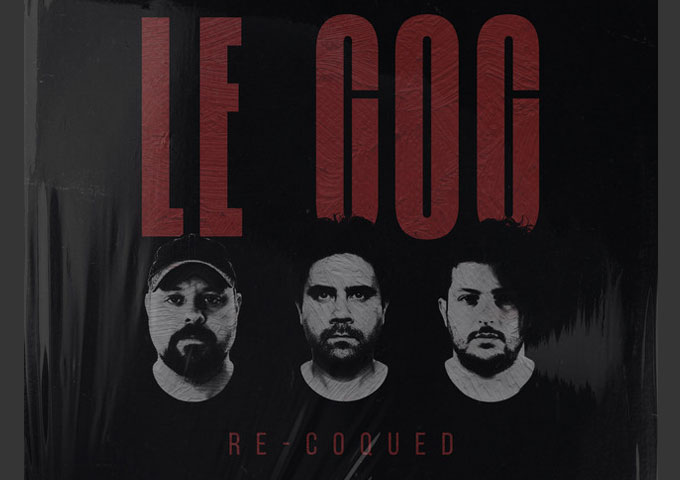
Le Coc Tears Open the Wound on the Explosive New Single “Known Secret”
Some songs make an impact because they’re loud. Others resonate because they speak the truth. Le Coc‘s new single “Known Secret” manages to do both simultaneously, fusing bone-deep emotional honesty with a melodic heavy rock framework that hits hard and lingers long after the final note has faded. It’s the kind of track that doesn’t ask for your attention so much as demand it.
Le Coc is the project of a Chilean guitarist and composer based in Santiago, a musician who has spent decades shaping his craft with the patience and discipline that only genuine passion can sustain. His influences read like a syllabus in rock greatness: Rush, Pink Floyd, Van Halen. Those names hint at the range he operates in, somewhere between technical precision, atmospheric depth, and the kind of visceral guitar work that grabs you by the collar. What sets him apart, however, is how seamlessly he filters those touchstones into something that feels entirely his own, epic in scope but rooted in human feeling.
For this new chapter, Le Coc has enlisted acclaimed Greek vocalist Tasos Lazaris, and the pairing couldn’t feel more deliberate or more right. Lazaris brings a visceral, emotionally raw quality to everything he touches, a voice that doesn’t hide behind polish or production tricks. Together, the two have built a record that explores love, society, and bravery with a depth and conviction that demands to be heard on its own terms. “Known Secret” arrives as the first real window into that world, and it is a formidable introduction.
The song deals with a subject that is as old as human nature itself: the secrets people carry, the truths they bury, and the slow, accumulating damage that concealment inflicts on everyone in its orbit. These aren’t dramatic revelations from a distance. The lyrics put you inside the experience, close enough to feel the weight of words unsaid and the fracture lines they leave behind. What begins as a quiet admission of pain gradually swells into something far more urgent, mirroring the psychological reality of living with a known but unspoken truth.
The opening verse establishes that weight immediately. There is a moment described where someone confesses that their life feels finished, and rather than disbelief, the narrator absorbs it as something that was always coming. The word “expelled” carries a particular charge there, suggesting that truth doesn’t simply emerge but is pushed out against resistance, against years of careful suppression. The bitterness referenced in those early lines isn’t dramatic bitterness. It’s the quiet, accumulated kind, the kind that sits in the back of the throat and flavors everything.
What makes the lyrical construction so effective is how it navigates the idea of collective complicity. The secret in question isn’t just held by one person. It is distributed across a group, sustained by silence and social pressure, kept alive by the unspoken agreement of those who would rather not confront it. The repeated acknowledgment that no one can keep it “no matter who you trust” is both a statement of inevitability and a kind of grief. Trust, after all, is supposed to be the safeguard. The realization that even trust cannot contain certain truths is a quietly devastating one.
The chorus is where the song shifts from reflection into something more urgent and direct. The word “unjust” lands with particular force, cutting through the more measured language of the verses to name the thing plainly. There is a moral clarity in that moment, a refusal to dress the situation up any further. And then the plea: “Please believe I don’t know why.” It’s disarming in its vulnerability, the narrator not presenting himself as someone with all the answers but as someone equally caught, equally wounded, trying to make sense of timing and circumstance that never made sense to begin with.
The bridge is perhaps the most quietly devastating section of the song. The image of childhood feelings being killed, of a soul filled with holes, of belonging called into question, these aren’t melodramatic flourishes. They read as the specific, personal residue of a long-running wound. The line about writing the song because “nobody knows where I think I belong” is striking in its honesty. It reframes the creative act itself as a search for meaning and place in the aftermath of something that reshaped the narrator’s internal landscape permanently. Art as navigation. Music as the only language left when ordinary words have failed.
Musically, the track earns every emotional claim it makes. Le Coc‘s guitar work operates on two levels simultaneously, providing both the melodic architecture that gives the song its shape and the raw, driving energy that keeps it alive. The double guitar approach creates a fullness and dimension that classic hard rock fans will recognize and appreciate, recalling the interplay of influence without copying any of it. The dynamics are carefully managed, pulling back where the song needs room to breathe and pushing forward when the emotional pressure demands release.
Glenn Welman’s drumming is impossible to overlook. It functions less as a rhythmic backdrop and more as a second emotional narrator, tracking the song’s psychological arc with a physicality that amplifies every turn. His playing generates constant forward tension, the kind that makes the eventual release feel genuinely earned rather than manufactured. The chemistry between Welman’s propulsion and Le Coc‘s guitar interplay gives the track its sense of contained power gradually finding its way out.
Tasos Lazaris is the voice that ties it all together, and his performance here is one of the more compelling rock vocal turns in recent memory. He navigates the track’s emotional range with a naturalism that is increasingly rare, moving between restraint and explosion without ever losing the thread of genuine feeling that makes every moment credible. When he pleads in the final passages, the repetition of “believe me” carrying an almost desperate urgency, it doesn’t feel performed. It feels necessary, like something that has been waiting a long time to be said out loud.
What Le Coc and Tasos Lazaris have built with “Known Secret” is a track that respects the intelligence and emotional range of its audience. It doesn’t simplify or soften the complexity of what it’s addressing. It sits with the discomfort, lets the tension build, and trusts that the listener is capable of meeting it where it lives. For fans of classic hard rock, melodic heavy rock, and music that carries genuine emotional weight, this is the kind of song worth returning to. Not just because it sounds good, but because it understands something real about what it costs to carry the truth for too long.