jAMBROSE Raises His Voice on the Urgent and Unflinching “Where Justice Dies”
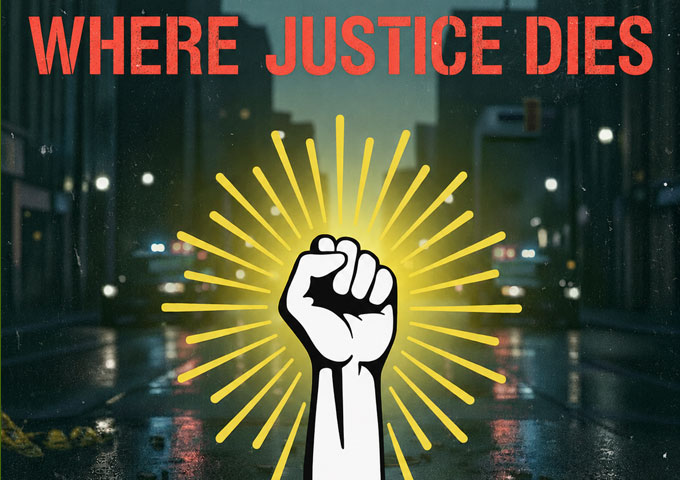
A New York songwriter, attorney, and filmmaker channels the grief of a divided nation into a sweeping Americana anthem built for the moment America turns 250. Featuring blind country singer Matt Carson and producer Greg Becker, the track stands as both a tribute to the fallen and a call to civic courage. With a moral clarity and the raw urgency of protest songwriting at its finest, jAMBROSE delivers a song that refuses to look away
There is a particular kind of grief that arrives not in a single wave but in a slow, accumulating weight, the grief of watching injustice repeat itself and wondering whether the voices raised against it will ever be loud enough to matter. It is from that place, deep and searching, that jAMBROSE has crafted “Where Justice Dies”, a track that manages to be both a personal reckoning and a communal cry, grounded in the events that shook Minneapolis and rippled across an already fractured America.
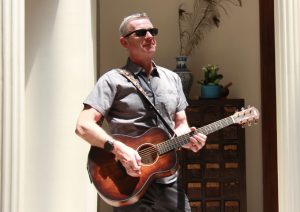
J.V. Ambrose, the New York-based songwriter, attorney, and filmmaker behind the jAMBROSE project, is not a casual observer of the subjects he writes about. His professional life is built around language, law, and the pursuit of accountability, and all three disciplines converge in the architecture of this song. He wrote it immediately in the aftermath of events in Minneapolis, compelled not by political ambition but by something more elemental: the belief that silence, in the face of injustice, is a form of complicity. It is a conviction that places him squarely in the lineage of socially conscious songwriting, and he wears that responsibility with evident care.
The clearest artistic touchstone Ambrose names is Pink Floyd’s “On the Turning Away”, a track built on the premise that willful ignorance makes us participants in the suffering of others. That moral framework pulses through “Where Justice Dies” from its very first verse, which opens with a January street in Minnesota and the image of a life extinguished before anyone stopped to ask the right questions. The narrative is drawn with the precision of a legal mind: facts laid bare, sequence examined, motive interrogated. But there is nothing cold about the delivery. The language carries weight because it refuses to dress the scene in abstraction. These are specific lives, specific silences, specific failures of the systems meant to protect people.
The lyrical structure of the song moves across three distinct narrative frames, each building toward the chorus with increasing urgency. The first centers on a Renée Good whose life was reduced to a headline, her humanity dismissed before the truth could take root. The second introduces Alex Pretti, a healer cast as a villain, his efforts to bear witness to injustice ultimately costing him everything. The third widens the lens entirely, shifting from individual stories to a systemic indictment, where access to basic needs has become a radical act and the language of order is deployed to justify its opposite. It is ambitious territory for a single track, but jAMBROSE navigates it without losing emotional coherence, tethering the macro to the deeply personal throughout.
The chorus is where the song finds both its center of gravity and its most enduring purpose. The repeated insistence that this country’s survival depends not on the silencing of its people but on their collective voice is not a subtle message, but it is a clarifying one. In a media landscape where outrage is often manufactured and discourse frequently collapses into noise, there is something almost countercultural about a song that asks listeners to think rather than react, to speak rather than scroll. The final echo of “not alive” beneath the closing refrain carries a particular chill, a reminder that the cost of continued silence is not abstract but mortal.
What elevates “Where Justice Dies” beyond the sum of its message is the quality of the collaboration surrounding it. Matt Carson, a country singer who has been blind since birth, brings an authority to the performance that no amount of craft alone could manufacture. His story is its own testament to the resilience the song celebrates, and his involvement lends the project a dimension of lived truth that resonates throughout. There is something quietly powerful about a voice shaped by navigating a world not built for it lending itself to a song about systemic failure and the courage of those who refuse to accept it.
Producer Greg Becker, whose credits include Carrie Underwood, LeAnn Rimes, and Tim McGraw, brings a sophisticated understanding of space and dynamics to the track. The production is rooted in Americana and rock flavors but never allows the sonic architecture to overshadow the lyrical content. Instead, each element, every instrumental swell, every moment of deliberate restraint, is placed in service of the message. Becker understands that a song of this nature requires the listener to feel as well as hear, and the production accomplishes exactly that. The arrangement breathes, allowing both voices room to land with full impact.
As the United States approaches the 250th anniversary of its founding, jAMBROSE has created something that feels particularly well-timed, not in a cynical or opportunistic sense, but in the way that great protest music always manages to feel both of its moment and beyond it. The questions the song raises about civic responsibility, about the relationship between freedom and its active defense, about what it means to carry the names of those the powerful would prefer forgotten, are not questions with easy answers. But they are exactly the questions a healthy democracy must be willing to sit with.
The song closes not with a triumphant flourish but with something more honest: a quiet insistence that the work is not finished, that the voices are still needed, that the moment has not passed. In that restraint lies the song’s greatest strength. jAMBROSE is not offering easy consolation. He is offering something rarer, a space for reflection, for conversation, for the kind of civic engagement that precedes any meaningful change.
“Where Justice Dies” is a song for those who believe that art carries obligation, that music can be more than entertainment, that a well-crafted chorus can do what a thousand arguments cannot: open a heart that has grown accustomed to closing. In that spirit, jAMBROSE has made something worthy of the moment and deserving of a wide, thoughtful audience.