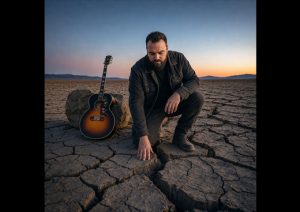
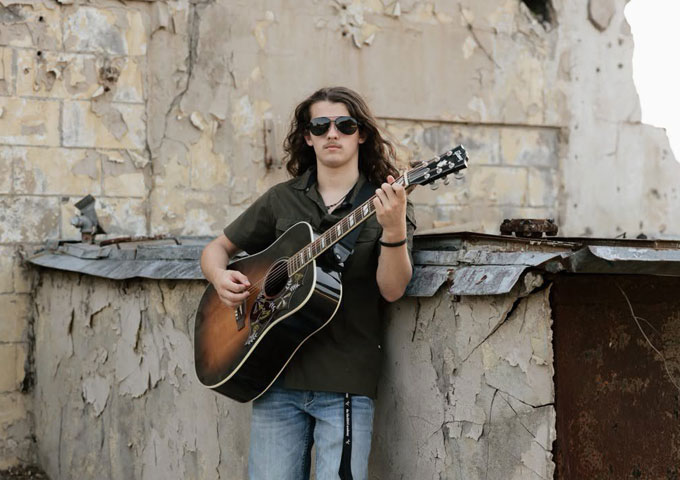
Judah Dean Turns Memory Into Melody With “Roses Die”
The 16-year-old Arkansas songwriter proves that some songs outlast the flowers that inspired them. A new single blending alt-country, Southern rock and Americana finds Judah Dean reckoning with love, loss and the strange power of a melody to pull you back. Already earning regional airplay and international press attention, “Roses Die” signals a bold new chapter for the young artist. It’s a song built on contrast, where wilted petals give way to memories that refuse to fade. This is old soul songwriting from a voice still finding its full range, and it’s impossible to ignore.
There’s a particular kind of ache that comes from hearing a song you didn’t expect to hear again, one that drags you somewhere you thought you’d left behind. Judah Dean understands that ache intimately, and he’s built his newest single around it. “Roses Die” is a song about the things that outlive the moments that created them, and it announces itself as one of the most fully realized releases yet from an artist who’s still just sixteen years old.
Dean has been writing and performing original music since he was fourteen, cutting his teeth on solo stages throughout his home region of Arkansas. He’s been voted Paragould’s Favorite Singer two years running, a distinction that speaks to a local following built one performance at a time. But “Roses Die” marks something different. It’s among his first professionally produced releases, and it represents a clear signal of where his music is headed next: bigger, bolder and rooted in a full-band sound that draws on Southern rock’s muscle and Americana’s patience.
The premise behind “Roses Die” is deceptively simple. Flowers wither. Whatever prompted someone to leave them behind eventually fades from the vase, but the memory tied to that gesture doesn’t die with the petals. Dean uses that image as the emotional spine of the song, a meditation on how relationships leave residue long after they’ve technically ended. Moving on, as Dean seems to understand with a wisdom beyond his years, isn’t the same thing as moving past. The song lives in that gap, the space between letting go and still remembering.
That thematic weight is matched by an arrangement that never wastes a moment. Clocking in at three minutes and forty-nine seconds, “Roses Die” opens on a country-flavored guitar arpeggio before an electro-acoustic guitar settles into warm, wide-panned chords. A second guitar layers in subtle melodic phrasing while the drums keep time on a closed hi-hat, creating an intimacy that pulls the listener in before a word is even sung. When the bass arrives, it does so with a clean, understated tone that gives the groove its foundation, and the drums lock into a rhythm that carries genuine country rock identity: a deep kick, a snare tuned low and dressed in soft reverb, and a cymbal kit that sounds bright without ever tipping into harsh.
Dean’s voice enters with a tone that feels lived-in rather than rehearsed. Positioned just above the mix and touched with reverb, his vocals carry a color that’s distinctly his own, conveying nostalgia without ever slipping into melodrama. He navigates the verses with a natural sense of phrasing, letting the story breathe rather than forcing it. That restraint pays off when the first chorus arrives. Snare fills announce the shift, electric guitars step in with controlled distortion, and backing vocals stack up behind Dean’s lead to create a chorus built for singing along. It’s the kind of hook that plants itself in your memory on a single listen, melodic and driving all at once.
From there, the song keeps building with real intention. The second verse pushes forward with a bolder attitude, muted electric guitar riffs adding texture while keyboard and piano bring in an Americana warmth that deepens the song’s country folk character. A brief interlude strips things back down to hi-hat and vocals, an intimate breath before the arrangement climbs again into a fuller, more energized chorus where the lead vocal and a guitar arpeggio trade off in two melodic lines that feel both close and expansive.
The real turn comes when that arpeggio dissolves into a guitar solo that leans hard into glam rock and hard rock influences, a genuinely thrilling moment that lifts the entire track to a new register. It’s a bold choice for a song this grounded in Americana storytelling, and it works because it feels earned rather than tacked on. The final verse pulls back to something almost bare, just Dean’s voice and a single guitar, before the drums and full band rebuild the momentum one last time and carry the song into a closing chorus that hits harder than anything before it. The outro that follows is cinematic and unhurried, every instrument fading together into a reverberant hush that lets the song’s emotional weight settle rather than snap shut.
What makes “Roses Die” stand out isn’t just the songwriting, though that alone would be impressive coming from a songwriter this young. It’s the level of craft in the production. The mixing and mastering meet a professional standard rarely associated with independent teenage artists, delivering a sound that’s crisp, immersive and dynamic enough to hold up on any playback system, whether it’s a car stereo on a long drive or a pair of headphones at two in the morning. Every arrangement choice, from the interlocking guitar layers to the placement of the backing vocals, feels deliberate. Nothing crowds the mix, and nothing is missing.
The response so far reflects that quality. “Roses Die” has picked up radio airplay on Z95, KASU and B2 Radio, and international outlets have taken notice, praising the song’s vocals, instrumentation and its unmistakably memorable chorus. That kind of early traction is rare for an artist still in high school, but it tracks with the trajectory Dean has been quietly building since he first picked up a guitar and started writing songs at fourteen.
Perhaps the most exciting part of this moment is that it feels like a beginning rather than a peak. Dean has recently moved beyond solo performances into full-band shows, joined by musicians with years of professional touring and recording experience behind them. That shift has already reshaped his live sound and his studio approach, bringing a rock-driven energy that “Roses Die” captures in real time. With new music underway and a growing schedule of shows across the region, Dean is positioning himself as an artist who pairs old-soul songwriting with an increasingly confident, full-band execution.
Songs like “Roses Die” work because they trust the listener to sit with a feeling rather than explain it away. Dean doesn’t resolve the tension between memory and moving forward, because there isn’t really a resolution to offer. Instead, he gives that tension a melody, a chorus, and a voice steady enough to carry it. For an artist this young, that’s a remarkably mature thing to understand, and it’s exactly why “Roses Die” feels less like a debut moment and more like the sound of someone just getting started.